
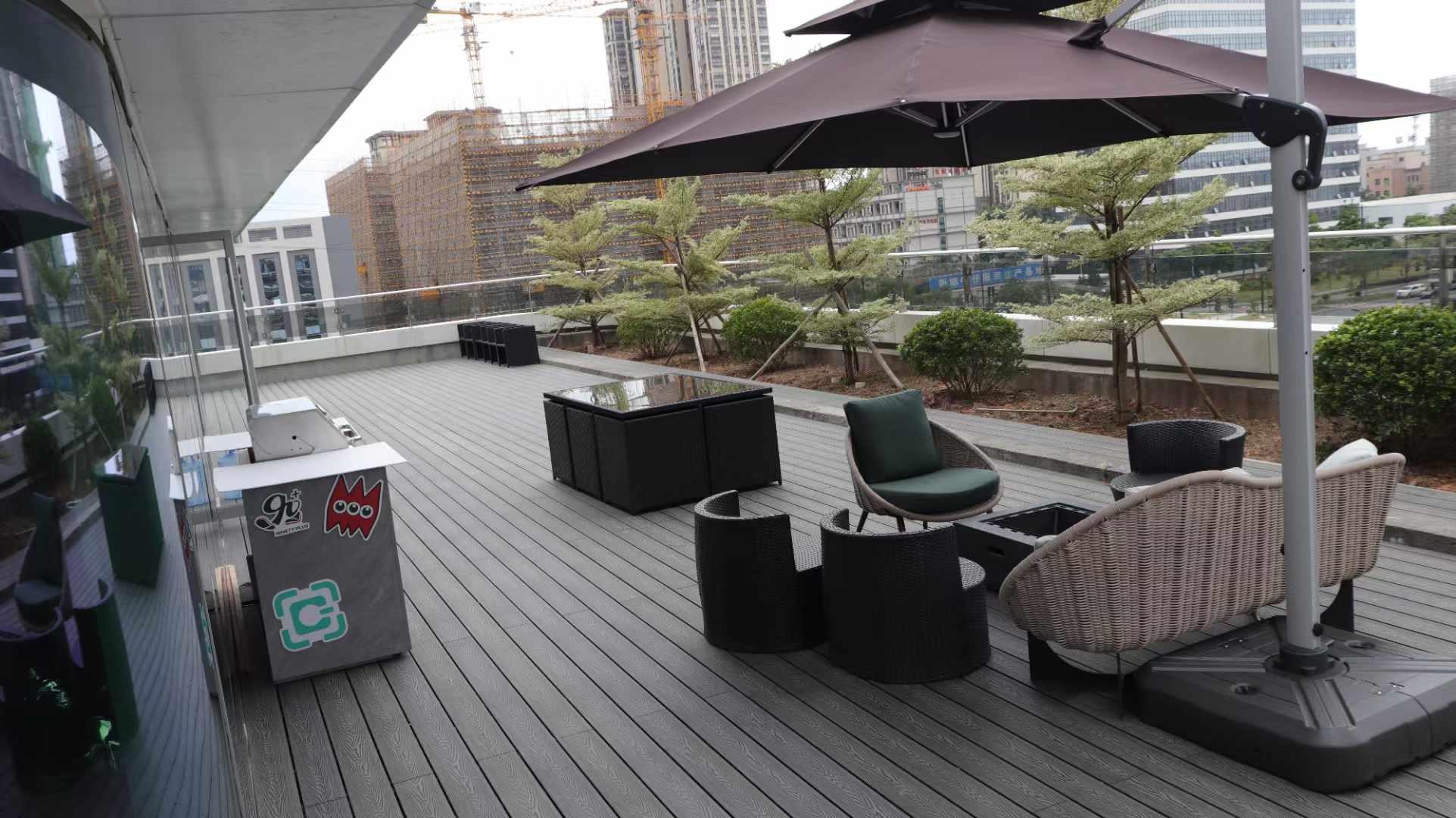
When using **WPC (Wood Plastic Composite) decking**, several precautions should be taken into account to ensure safety, maintain quality, and extend its lifespan. Here are the key precautions to follow:
### **1. Installation Precautions**
– **Proper Ventilation**:
– Ensure that there is enough space for air to flow beneath the deck. Poor ventilation can trap moisture, leading to mold or mildew growth, and negatively affect the deck’s performance.
– **Allow for Expansion and Contraction**:
– WPC decking expands and contracts with temperature changes. Always leave adequate expansion gaps between boards (typically 5-8 mm) and between the decking and walls to prevent warping, buckling, or cracking.
– **Use Correct Fasteners**:
– Use the recommended fasteners, whether hidden clips or stainless-steel screws, to secure the boards properly. Incorrect fasteners can loosen over time and cause structural issues.
– **Substructure Support**:
– The substructure (joists and beams) should be strong and stable to support the weight of the decking and any potential loads (furniture, people). Weak substructures can cause sagging or instability.
– **Do Not Install Directly on the Ground**:
– WPC decking should not be installed directly on the ground or soil. Use a substructure or place it over a concrete base to prevent moisture absorption and rot.
—
### **2. Weight and Load Limitations**
– **Do Not Overload**:
– Although WPC decking is durable, it has weight limits. Avoid placing extremely heavy objects (e.g., hot tubs, large planters, or heavy furniture) without verifying the decking’s load-bearing capacity. Check with the manufacturer for specific weight limits.
– **Avoid Concentrated Loads**:
– Heavy loads, especially in a concentrated area, can stress the decking. Distribute the weight evenly and use protective pads or supports if necessary.
—
### **3. Avoid Using Rubber-Backed Mats**
– **Use Non-Rubber Mats**:
– Rubber-backed mats or rugs can trap moisture and cause discoloration or staining of the WPC surface. Opt for woven or non-rubber mats that allow airflow and are safe for composite decking.
—
### **4. Heat Precautions**
– **Avoid Direct Exposure to Fire or High Heat**:
– WPC decking is not fireproof, and placing hot objects (such as grills, fire pits, or lit cigarettes) directly on the decking can cause scorching or damage. Always use heat-resistant mats or pads under grills and fire pits to protect the deck.
– **Temperature Sensitivity**:
– In hot climates, WPC decking can absorb heat and become hot to the touch. If the decking will be in direct sunlight, consider using lighter colors, which absorb less heat than darker tones.
—
### **5. Chemical and Stain Precautions**
– **Avoid Harsh Chemicals**:
– Avoid using strong chemicals, solvents, or bleach when cleaning WPC decking, as these can damage the surface or cause discoloration. Always use a mild soap or a cleaner approved by the manufacturer.
– **Clean Spills Promptly**:
– Clean up any oil, grease, or food spills as soon as possible to prevent staining. WPC is stain-resistant but not stain-proof, and prolonged exposure to oils or other substances can leave marks.
—
### **6. Snow and Ice Management**
– **Avoid Metal Shovels**:
– If you need to remove snow, use a plastic or rubber-tipped shovel. Metal shovels can scratch and damage the surface of the decking.
– **Use Safe De-Icing Products**:
– Use calcium chloride or other manufacturer-recommended de-icing products during the winter. Avoid rock salt or harsh chemicals, as they can degrade the decking material.
—
### **7. Sun and UV Exposure**
– **UV Protection**:
– While WPC decking is designed to resist UV damage, prolonged exposure to direct sunlight can lead to slight fading over time. Consider adding shading elements (like pergolas or umbrellas) to high-sunlight areas to reduce UV exposure and heat buildup.
—
### **8. Mold and Mildew Precautions**
– **Prevent Moisture Trapping**:
– Ensure proper drainage and ventilation under the deck to prevent moisture accumulation, which can promote mold or mildew growth. Clean the deck regularly to remove organic debris, like leaves or dirt, that could trap moisture.
– **Avoid Prolonged Water Exposure**:
– Avoid leaving items that trap moisture (e.g., wet rugs, planters) directly on the decking for extended periods. This can create an ideal environment for mold or mildew growth.
—
### **9. Avoid Dragging Heavy Items**
– **Furniture Pads**:
– Use protective pads under furniture and other heavy objects to prevent scratching or scuffing the deck surface. Always lift, rather than drag, heavy objects across the deck.
—
### **10. Cleaning and Maintenance**
– **Regular Cleaning**:
– Regularly clean the decking with mild soap and water to remove dirt and debris. Use a soft-bristle brush for textured surfaces or grooves.
– **Avoid Pressure Washing**:
– If you use a pressure washer, keep the pressure under 1,500 psi and hold the nozzle at least 8 inches from the surface to avoid damaging the decking.
—
### **11. Inspect and Repair**
– **Check for Damage**:
– Periodically inspect the decking for any signs of damage, such as loose boards or fasteners, and address issues promptly to prevent further problems.
– **Fix Scratches Promptly**:
– For minor scratches or surface imperfections, use manufacturer-recommended touch-up kits or lightly sand the affected area if permitted.
—
### Summary:
To ensure safe and long-lasting use of WPC decking, it’s crucial to install it with proper ventilation, allow for expansion gaps, and follow recommended maintenance routines. Avoid heavy loads, direct heat exposure, harsh chemicals, and excessive moisture buildup. Proper cleaning, timely repairs, and careful handling will help preserve the decking’s appearance and functionality over time.

Leave A Comment