
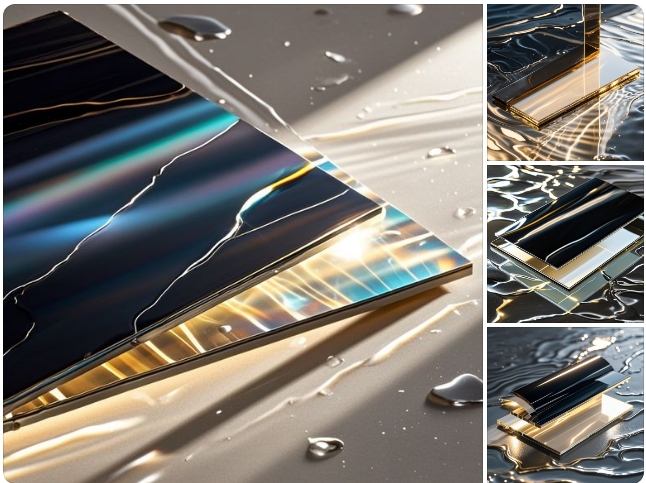
Testing the waterproof and moisture-proof performance of bamboo charcoal boards involves a variety of standardized methods that assess their ability to resist water absorption, humidity, and moisture-related damage. Below are specific methods commonly used in these tests:
- Water Absorption Test (ASTM D570 or similar)
– Purpose: To determine how much water the bamboo charcoal board can absorb when exposed to moisture or submerged in water.
– Procedure:
– A sample of the bamboo charcoal board is dried and weighed.
– It is then immersed in water for a specific period (usually 24 hours).
– After immersion, the board is removed, wiped to remove surface water, and weighed again.
– The increase in weight represents the amount of water absorbed.
– Result: A lower water absorption percentage indicates better waterproof performance.
- Surface Water Resistance Test
– Purpose: To evaluate the ability of the board to resist water penetration on its surface.
– Procedure:
– Water droplets or a stream of water are applied to the surface of the bamboo charcoal board.
– Observations are made for any signs of swelling, discoloration, or water penetration after a specific duration.
– The surface is then dried and inspected for lasting effects.
– Result: No visible signs of swelling or watermarks indicate good water resistance.
- Moisture Content Test (ASTM D4442 or ISO 3130)
– Purpose: To measure the inherent moisture content of the bamboo charcoal board.
– Procedure:
– A sample is dried in an oven to a constant weight at a specified temperature (usually 103°C).
– The sample is weighed before and after drying to determine moisture content.
– Result: Lower moisture content suggests better moisture-proof properties.
- Humidity Resistance Test (Climate Chamber Method)
– Purpose: To assess how the board reacts to high humidity environments.
– Procedure:
– The bamboo charcoal board is placed in a climate chamber with controlled high humidity (usually 90-95%) and a specific temperature (around 40°C).
– The board is kept in these conditions for an extended period (up to 72 hours or more).
– The board is then inspected for signs of deformation, swelling, or other moisture-related damage.
– Result: Minimal swelling, warping, or degradation shows good moisture resistance.
- Water Vapor Transmission Test (ASTM E96)
– Purpose: To measure the rate at which water vapor passes through the bamboo charcoal board.
– Procedure:
– The bamboo charcoal board is sealed in a container with a desiccant or water, depending on whether you’re measuring vapor ingress or egress.
– The setup is maintained at a specific temperature and humidity.
– The weight of the assembly is monitored over time to determine the amount of water vapor that passes through the board.
– Result: Lower water vapor transmission indicates better resistance to moisture ingress.
- Swelling in Thickness Test (EN 317)
– Purpose: To assess how much the thickness of the bamboo charcoal board increases when exposed to water.
– Procedure:
– The board sample is immersed in water for a specified period (usually 24 hours).
– After immersion, the thickness of the board is measured before and after exposure.
– Result: Lower swelling in thickness indicates better waterproof and moisture-proof properties.
- Boiling Water Resistance Test
– Purpose: To evaluate the board’s performance when exposed to extreme water conditions, such as boiling.
– Procedure:
– The board is submerged in boiling water for a specified time (usually 2 hours).
– After exposure, the board is dried and inspected for any visible damage, swelling, or delamination.
– Result: Minimal changes in appearance or structure after boiling indicate excellent water resistance.
- Freeze-Thaw Cycle Test (ASTM C666)
– Purpose: To test how the bamboo charcoal board withstands alternating freezing and thawing, which simulates moisture-related wear over time.
– Procedure:
– The board is subjected to repeated cycles of freezing and thawing in a controlled environment.
– After a set number of cycles, the board is inspected for cracks, swelling, or other forms of damage.
– Result: No visible degradation after several cycles indicates strong moisture resistance.
These tests are crucial for understanding how bamboo charcoal boards will perform in environments where moisture exposure is a concern.

Leave A Comment