

The production process of **WPC (Wood Plastic Composite) decking** involves several steps, combining both wood fibers and plastic materials to create a durable and versatile decking product. Below is an overview of the key stages in the manufacturing process:
### **1. Material Selection and Preparation**
– **Raw Materials**:
– **Wood Fibers**: Commonly sourced from recycled wood, sawdust, or wood flour. The type of wood used can vary, with options like pine, oak, or hardwoods.
– **Plastic Resins**: Typically includes recycled polyethylene (PE), polypropylene (PP), or polyvinyl chloride (PVC). These plastics can also come from post-consumer materials.
– **Material Processing**:
– **Grinding and Drying**: Wood fibers are ground to a specific particle size and dried to remove moisture. This ensures a consistent mix and enhances the bonding with plastic.
### **2. Formulation**
– **Mixing**:
– The dried wood fibers are mixed with plastic resins in precise proportions, often around 50% wood fibers and 50% plastic.
– Additives such as colorants, UV stabilizers, antifungal agents, and lubricants may also be included to enhance performance and appearance.
### **3. Extrusion**
– **Extrusion Process**:
– The blended materials are fed into an extruder, where they are heated and melted.
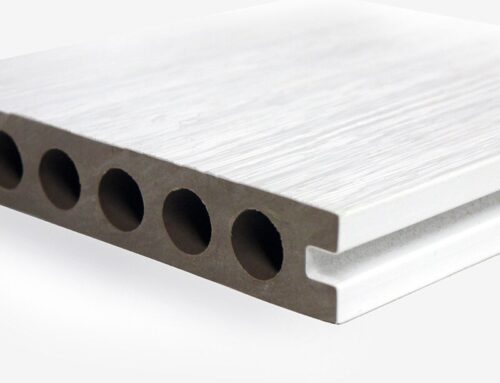
– The molten mixture is forced through a die to form the desired shape and profile of the decking boards.
– **Cooling**:
– After exiting the die, the extruded material is cooled and solidified, often using water baths or air cooling systems.
### **4. Shaping and Cutting**
– **Profiling**:
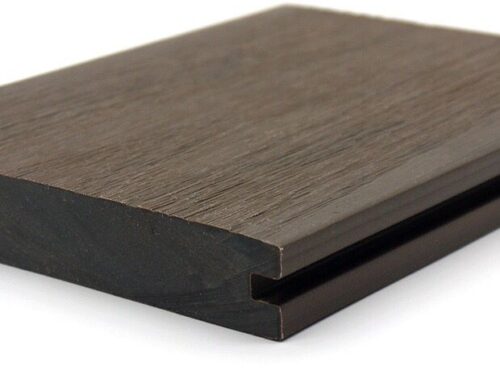
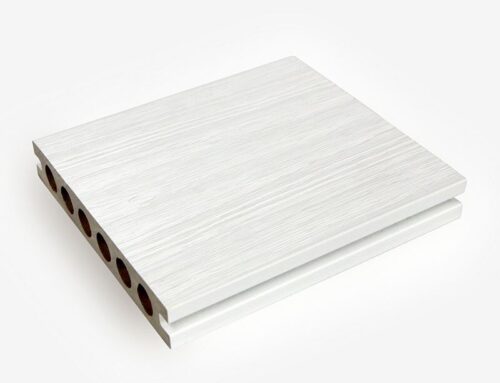
– The cooled WPC boards are then shaped to create grooves, textures, or designs that mimic natural wood. This step is crucial for aesthetic purposes and slip resistance.
– **Cutting to Length**:
– The continuous WPC profiles are cut into specific lengths based on market demand or customer specifications.
### **5. Quality Control**
– **Inspection**:
– Each batch of WPC decking undergoes quality checks to ensure it meets industry standards for durability, moisture resistance, color consistency, and dimensional accuracy.
– **Testing**:
– Samples may be subjected to various tests, including moisture absorption, UV resistance, and mechanical properties (like tensile strength and flexibility).
### **6. Surface Finishing**
– **Texturing and Coating**:
– Depending on the desired finish, the boards may undergo additional surface treatment. This can include texturing to enhance grip or applying a protective coating for increased durability and UV resistance.
### **7. Packaging and Shipping**
– **Packaging**:
– Once the decking is approved for quality, it is packaged for shipment. This may involve stacking the boards, wrapping them in protective material, and labeling.
– **Distribution**:
– The finished WPC decking is then shipped to retailers, distributors, or directly to consumers.
—
### **Summary**
The production process of WPC decking involves selecting and preparing raw materials, mixing wood fibers with plastic, extruding and shaping the material, conducting quality control checks, applying surface finishes, and finally packaging for distribution. Each step is designed to ensure that the resulting product is durable, attractive, and suitable for outdoor use, meeting the needs of consumers looking for sustainable decking solutions.

 English


Leave A Comment