
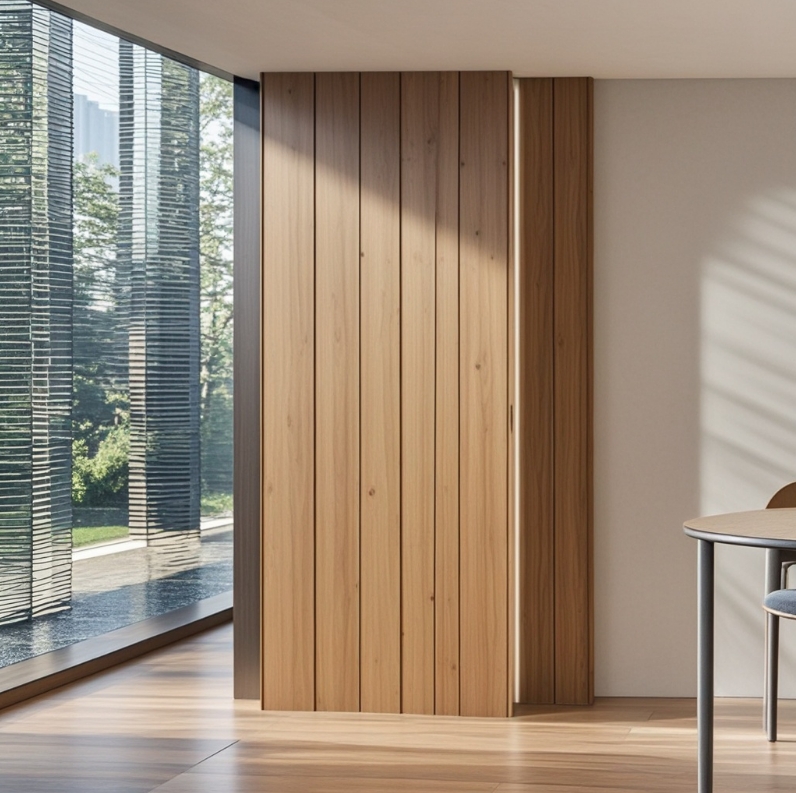
The **production cost of WPC (Wood Plastic Composite) cladding** can vary based on several factors, including raw material costs, manufacturing processes, product specifications, and regional market conditions. However, the general cost breakdown for producing WPC cladding includes the following key elements:
### **Factors Affecting the Production Cost of WPC Cladding:**
1. **Raw Materials**:
– WPC is made from a blend of **wood fibers (wood flour)** and **thermoplastic materials** (like polyethylene, polypropylene, or PVC).
– The cost of **recycled plastics** or **virgin polymers** and **wood fibers** significantly impacts the overall production cost. Using **recycled materials** may lower costs, while virgin materials tend to be more expensive.
– **Additives** such as UV stabilizers, colorants, coupling agents, and anti-fungal agents contribute to the final cost.
2. **Manufacturing Process**:
– The production of WPC cladding involves processes like **mixing, extrusion, molding, and cooling**, all of which incur operational costs related to **energy consumption**, **labor**, and **equipment maintenance**.
– Advanced processes, such as **embossing for wood-like textures**, or adding **special coatings** for UV and water resistance, can increase production costs.
3. **Equipment and Technology**:
– The cost of production is influenced by the type of machinery used. High-quality extrusion machines, dies for profiling, and other equipment used in WPC production are expensive to purchase and maintain, impacting the final product price.
– More automated production lines may lead to higher upfront investment but result in long-term cost savings due to **increased efficiency**.
4. **Quality of the Product**:
– **Higher-quality WPC cladding** with superior performance, aesthetics, and longer lifespan will have higher production costs. These products typically use better raw materials and undergo more rigorous quality control.
5. **Scale of Production**:
– Large-scale manufacturers often achieve **economies of scale**, reducing the per-unit cost of WPC cladding production compared to smaller-scale operations. Bulk production lowers costs associated with raw materials and manufacturing.
6. **Logistics and Distribution**:
– **Transportation** and **packaging costs** are also included in the final cost. Lightweight cladding reduces logistics costs, but factors like location, distance, and shipping conditions impact overall expenses.
### **Estimated Production Costs:**
– The **production cost** of WPC cladding typically ranges from **$2 to $5 per square foot**, depending on the quality of raw materials and the complexity of the manufacturing process. In some regions, it might be higher or lower based on the factors mentioned above.
### **Overall Pricing in the Market**:
– After accounting for production, transportation, marketing, and retailer markups, the **market price** for WPC cladding usually falls between **$5 and $12 per square foot**, with premium options possibly costing more due to enhanced features or brand reputation.
—
While WPC cladding can be more expensive to produce than traditional materials like vinyl or natural wood initially, its **low maintenance requirements**, **long lifespan**, and **sustainability** make it a cost-effective option over time.



Leave A Comment