
The box types of customized packaging boxes can be divided into six categories according to structural logic, and the opening methods and applicable scenarios of each category vary greatly. Below, we will sort out the general industry classifications for you.
1、 The tubular folding box (the most basic bulk box type) is made by folding a piece of cardboard into a “tubular” body, and the upper and lower ends are sealed with shaking caps. It can be flattened and transported at the factory, and then stretched open at the terminal.
According to the bottom structure, there are several common variants:
• Double Insertion Box (RTE/STE): upper and lower tongue sealing, low cost, known as the “ancestor of paper packaging boxes”
• Lock Bottom Box/Buckle Bottom Box: The bottom four rocking covers are interlocked with each other for locking, which can bear weight without glue, suitable for bottled skincare products, fruit sauce, etc.
• Crash Lock: Pre coated with glue during the pasting stage, it can be molded in one squeeze during use, and is preferred for assembly line packaging. Typical uses: lightweight fast-moving consumer goods such as toothpaste, biscuits, drugs, cosmetics samples, etc.
2、 Disc folding box (flat large opening) has a low height and a large bottom area, with the box cover occupying the largest area. After opening, the product display surface is large. Structurally, there is almost no need for bonding, and it can be restored to a flat surface after folding. The main box cover forms include cover type, shake cover type, drawer cover type, and plug-in type. Typical uses: flat or large items such as shoe boxes, clothing, pastries, pizzas, mooncake boxes, etc.
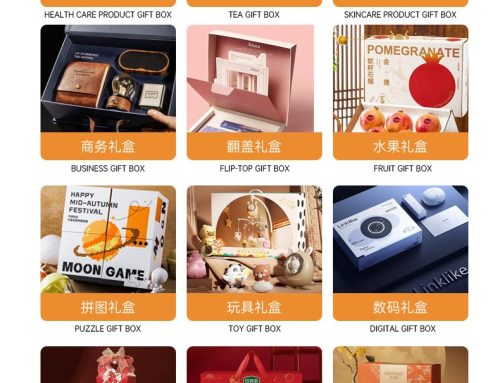
3、 The lid and bottom of the classic hard box are completely separated, with the lid covering the bottom box and fixed by gravity or slight friction. The bite depth is usually 10-20mm, with a golden value of 15mm. • Advantages: Strong sense of opening ceremony, stable structure, can be matched with magnetic suction/ribbon/inner support • Disadvantages: The bottom cover is easy to separate and lose, and the bottom box is under heavy pressure when stacked vertically, which is not suitable for heavy objects weighing more than 3kg. Typical uses: tea leaves, mooncakes, mobile phones, jewelry, and health product gift boxes.
4、 Book type box/flip cover box (preferred for high-end style) resembles a hardcover book, with one spine connecting the cover and back cover. The flip cover opens and is often equipped with a magnetic clasp. The spine of the book needs to reserve a folding gap of 1.5-2 times the thickness of the board on the gray board, with an opening angle of ≥ 180 °. • The magnetic suction box is its enhanced version: four neodymium magnets (10-15mm in diameter) are built in, and the closure has a “Pa” feedback feeling, which can be repeatedly opened and closed. Typical uses: perfume, wristwatch, high-end beauty suit, limited co branding gift box, and book collection.
5、 Drawer box (with the strongest interaction) has a double-layer structure of outer shell and inner box, with the inner box horizontally pulled out. The gap between the inner and outer boxes should be controlled at 0.5-1.5mm, and if it is too tight, it may cause jamming, looseness, shaking, or even sliding out. Typical uses: jewelry, perfume, chocolate, 3C accessories, business gift box.
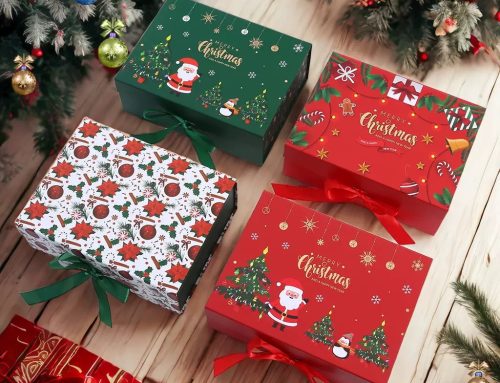
6、 Alien boxes (differentiation and social currency) break away from the square geometric framework and achieve a unique appearance through die-cutting, folding, and combination. The mainstream forms include: • Geometric types: heart-shaped, hexagonal, octagonal, triangular, pyramid shaped, diamond shaped • Styling types: animal contours, brand IP, holiday symbols (gingerbread man, Christmas tree) • Interactive types: crown box (radial flap unfolding), spiral lid, curved folding box, irregular shape box with the highest visual impact and shelf recognition, but with high tooling costs and long production cycles, it is mostly used for limited editions, holiday restrictions, and flagship products.
 English


Leave A Comment