
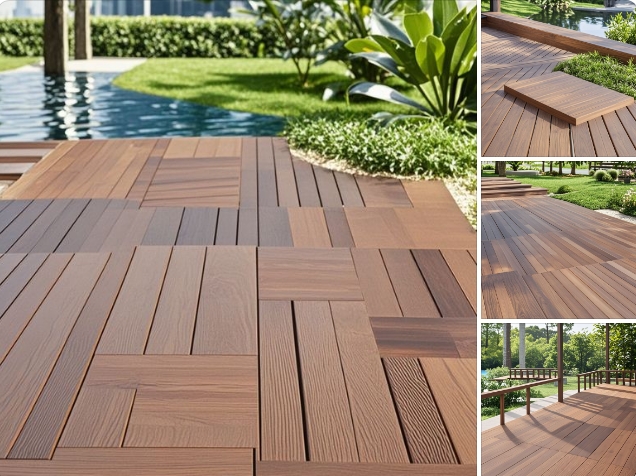
When comparing the durability of Wood Plastic Composite (WPC) products and solid wood boards, WPC typically offers greater durability for certain applications, especially in outdoor environments or situations where moisture and weather exposure are concerns. However, the overall durability depends on factors like usage, environment, and maintenance. Here’s a detailed comparison:
—
Durability Comparison: WPC vs. Solid Wood
# 1. Moisture Resistance
– WPC: Highly moisture-resistant. Since WPC is made of a combination of wood fibers or flour and plastic, it is resistant to water absorption, swelling, and warping. This makes it ideal for outdoor applications such as decking, fencing, and siding, where it will be exposed to rain, snow, and humidity.
– Solid Wood: Most types of solid wood (especially untreated) are prone to absorbing moisture, which can lead to swelling, warping, rot, and decay over time. Even treated or sealed wood needs regular maintenance to prevent moisture-related damage.
Winner: WPC. It performs better in high-moisture environments and requires less maintenance than solid wood.
# 2. Resistance to Insects and Rot
– WPC: Resistant to termites, wood-boring insects, and fungal decay due to the plastic component, making it less vulnerable to biological damage.
– Solid Wood: Solid wood is susceptible to insect infestations (such as termites) and fungal decay, particularly in humid environments or when in contact with the ground. Treated wood can offer some protection, but it may still require regular maintenance to avoid insect damage.
Winner: WPC. It is highly resistant to insects and rot, even without treatments.
# 3. Durability Against Weathering (UV, Heat, and Cold)
– WPC: WPC products are designed to be resistant to UV rays, but over time they can fade due to sun exposure. However, WPC does not crack or warp as easily as wood under extreme temperature changes. It is more stable in hot and cold weather, though excessive heat can cause some expansion.
– Solid Wood: Wood tends to warp, crack, or split over time, especially with repeated exposure to heat, cold, and sunlight. UV exposure can cause wood to fade or change color unless regularly treated or painted. Expansion and contraction with temperature changes can also cause solid wood to warp or crack.
Winner: WPC. It is more dimensionally stable in extreme weather conditions.
# 4. Maintenance Requirements
– WPC: Low maintenance. It requires occasional cleaning but does not need to be sanded, painted, or sealed. WPC is relatively resistant to staining and surface damage, and it doesn’t need the regular upkeep that solid wood demands.
– Solid Wood: High maintenance. Solid wood needs regular treatment such as sealing, painting, or staining to protect it from moisture, UV damage, and pests. Without consistent upkeep, wood can deteriorate much faster.
Winner: WPC. It requires significantly less maintenance than solid wood.
# 5. Resistance to Scratches and Surface Damage
– WPC: More resistant to scratches and surface wear than solid wood. WPC products are engineered to have a tougher surface that resists dents and scratches better than natural wood, especially in high-traffic areas.
– Solid Wood: More prone to surface damage. Solid wood can scratch, dent, or scuff easily, particularly softwoods like pine. Even hardwoods can show wear over time, especially without protective coatings.
Winner: WPC. It resists surface damage better than solid wood.
# 6. Lifespan
– WPC: Typically lasts 20-30 years or more, depending on the environment and product quality. Since WPC is resistant to many of the factors that degrade solid wood, it tends to have a longer lifespan in outdoor settings.
– Solid Wood: The lifespan of solid wood varies depending on the species and maintenance. For example, durable hardwoods like teak or ipe can last for decades if properly maintained. However, untreated or poorly maintained wood can degrade much more quickly, especially in harsh environments.
Winner: WPC, especially in outdoor or high-moisture settings. In well-maintained indoor environments, solid wood can also be very durable, but it typically requires more upkeep.
# 7. Environmental Impact
– WPC: Often considered environmentally friendly because it is made from recycled materials (both plastic and wood waste). However, WPC products are not biodegradable, and some forms may not be easily recyclable after their useful life.
– Solid Wood: Natural and biodegradable, wood is a renewable resource when harvested sustainably. However, the environmental impact depends on the source of the wood and the use of treatments and finishes.
Winner: Depends. Solid wood from sustainable sources is more eco-friendly in terms of biodegradability, while WPC is often made from recycled materials, reducing waste.
—
Conclusion
WPC is generally more durable than solid wood, especially in outdoor environments where moisture, weather exposure, and insect damage are concerns. WPC’s resistance to moisture, rot, pests, and UV radiation, combined with its low-maintenance requirements, gives it a longer lifespan in harsh conditions.
Solid wood, on the other hand, can be more aesthetically pleasing and environmentally friendly, particularly if sourced sustainably, but it requires regular maintenance to prevent deterioration. In indoor settings or where aesthetics and a natural feel are important, solid wood can be a better option, provided it is well-maintained.
For long-term durability with minimal upkeep, WPC is the clear winner.

Leave A Comment