
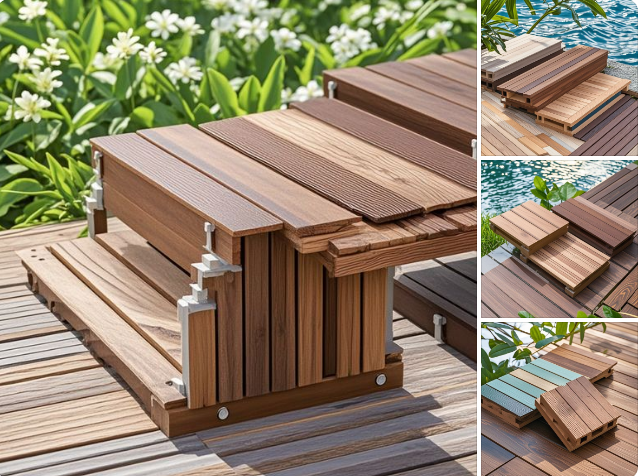
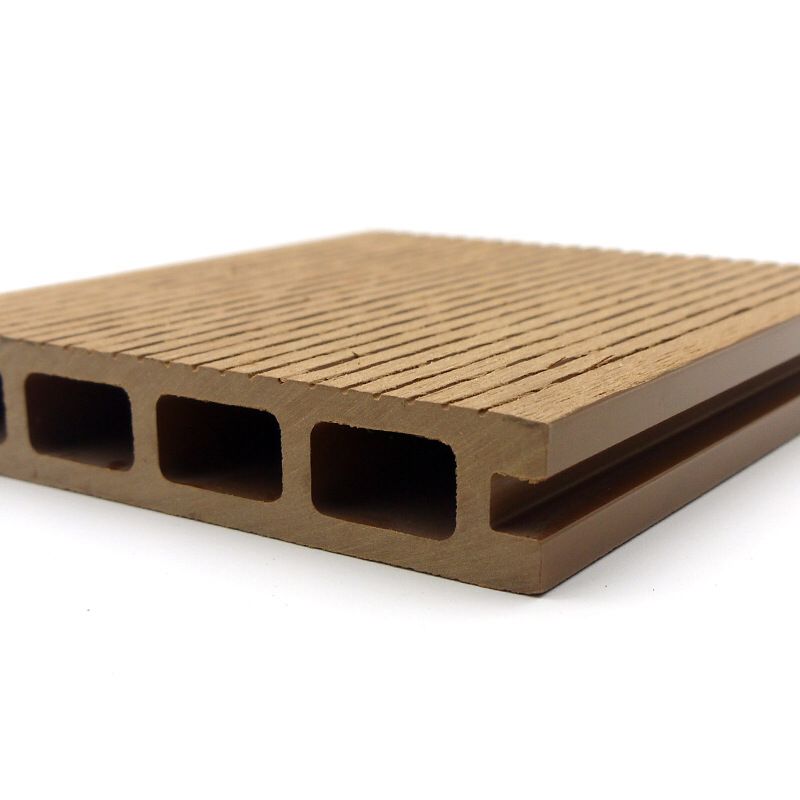
Wood-plastic products, also known as Wood Plastic Composites (WPC), are a blend of wood fibers (or wood flour) and thermoplastic materials (such as polyethylene, polypropylene, or PVC). This combination creates a material that retains the aesthetic qualities of natural wood but also offers improved durability and performance due to the plastic component. These products are widely used for decking, fencing, siding, furniture, and more. Below are the key characteristics and advantages of wood-plastic products.
Characteristics of Wood Plastic Products (WPC)
- Material Composition:
– Wood-plastic composites are typically made from 40-60% wood fibers (often sawdust or wood flour) and 40-60% plastic materials (such as polyethylene, polypropylene, or polyvinyl chloride).
– They may also contain additives such as stabilizers, colorants, or UV inhibitors to improve performance and appearance.
- Appearance:
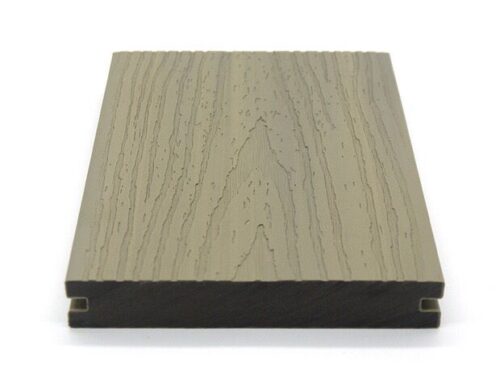
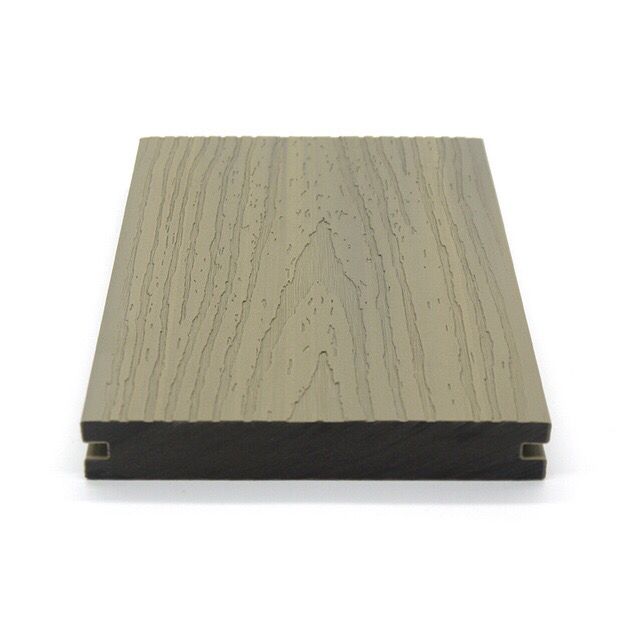
– WPC products closely resemble the natural appearance of wood, often featuring wood-like textures and grains.
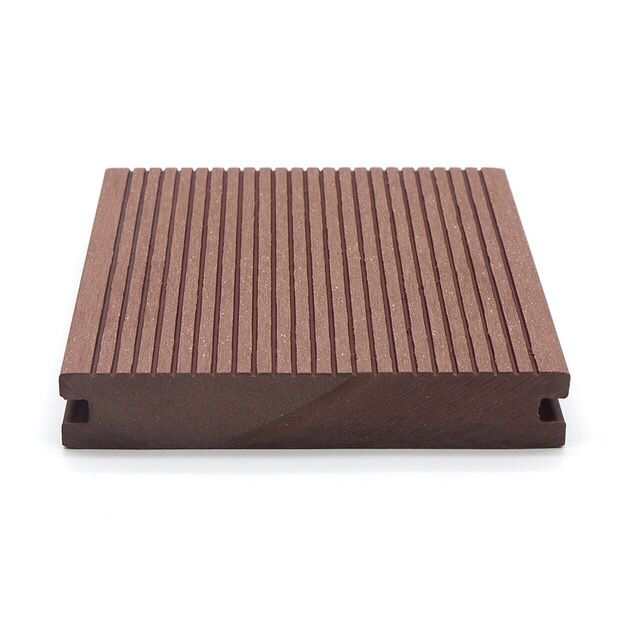
– They can be stained, colored, or painted to achieve various finishes and aesthetic styles.
- Water Resistance:
– The plastic content in WPC makes it highly resistant to water absorption. Unlike natural wood, WPC does not warp, swell, or rot when exposed to moisture.
- Durability:
– WPC products are strong and durable, offering resistance to cracking, splitting, and insect damage. They typically have a longer lifespan compared to natural wood products.
- Low Maintenance:
– Unlike natural wood, WPC does not require frequent painting, sealing, or staining to maintain its appearance and performance. Regular cleaning is usually sufficient to keep it in good condition.
- Environmental Impact:
– WPC is considered an eco-friendly material since it often uses recycled plastics and wood waste (e.g., sawdust) in its composition. Some manufacturers emphasize sustainable production methods.
Advantages of Wood Plastic Products (WPC)
- Moisture Resistance and Water-Proofing:
– One of the most significant advantages of WPC is its high resistance to water and moisture. This makes it an ideal material for outdoor applications, such as decking, where weather exposure is a concern.
– WPC products do not absorb moisture as much as natural wood, preventing issues like warping, rotting, and mildew growth.
- Durability and Longevity:
– WPC is highly durable and resistant to damage caused by environmental factors such as UV rays, rain, snow, and extreme temperatures.
– The addition of plastic makes it less susceptible to common issues with wood, such as cracking, splitting, or insect attacks.
– This durability leads to a longer lifespan compared to untreated natural wood, making WPC ideal for applications in harsh or humid environments.
- Low Maintenance:
– One of the biggest selling points of WPC is its low maintenance requirements. Natural wood typically requires periodic sanding, painting, or staining, while WPC products require minimal upkeep.
– Occasional cleaning with soap and water is usually enough to maintain the appearance of WPC products.
– WPC does not splinter, making it a safer and more comfortable material for applications like decking and fencing.
- Eco-Friendly and Sustainable:
– WPC often uses recycled plastic and reclaimed wood fibers, which reduces waste and the demand for virgin materials. Many manufacturers produce WPC from post-consumer recycled plastic, making it a sustainable choice.
– By utilizing wood waste, WPC helps reduce the need for deforestation.
- Aesthetic Appeal:
– WPC products can be made to resemble natural wood textures and grains, offering a visually appealing alternative to real wood.
– They are available in a wide range of colors and finishes, and the colors are typically UV-resistant, meaning they fade less over time compared to painted wood.
– They can be custom-manufactured to achieve various design styles, offering flexibility in architectural and landscape applications.
- Weather Resistance:
– WPC products can withstand extreme weather conditions, including intense sunlight, heavy rain, and freezing temperatures. This makes them ideal for outdoor applications such as decking, fences, and pergolas.
– Many WPC products contain UV inhibitors that protect against fading and degradation caused by prolonged sun exposure.
- Insect and Pest Resistance:
– Unlike natural wood, WPC products are resistant to termites and other wood-boring insects, as the plastic content deters pests from nesting or feeding on the material.
- Slip Resistance:
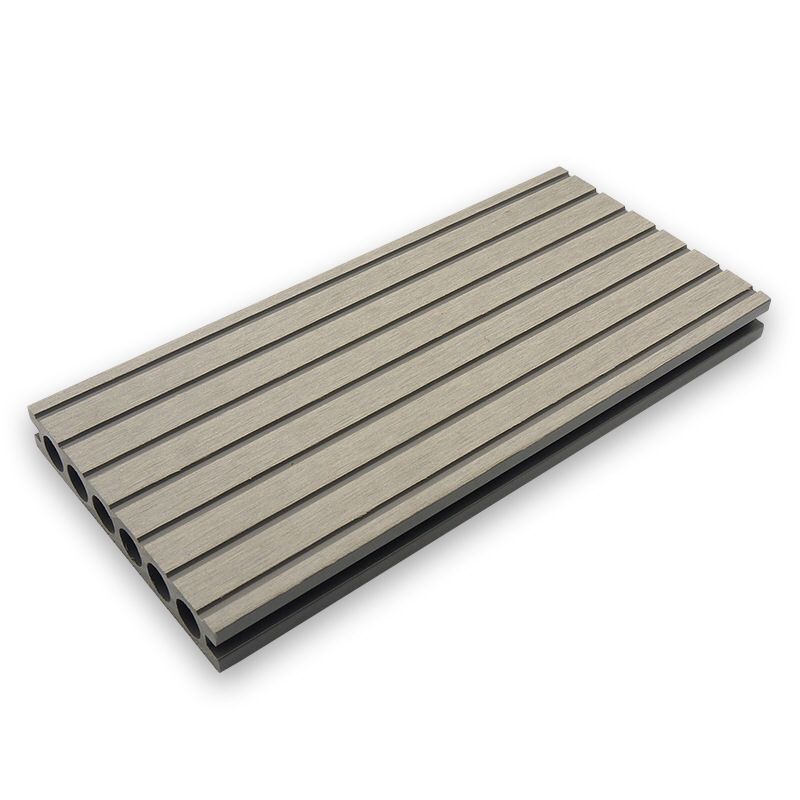
– Many WPC products are designed with textured surfaces that provide slip resistance, making them suitable for outdoor decking, pool areas, and walkways where safety is a priority.
- Fire Retardancy:
– WPC can be formulated with fire-retardant additives, making it safer in fire-prone areas compared to untreated wood.
- Cost-Effective in the Long Term:
– Although WPC may have a higher initial cost than some natural wood products, its lower maintenance costs and longer lifespan make it a cost-effective solution over time.
—
Disadvantages of Wood Plastic Products (WPC)
While WPC has many advantages, it is important to be aware of its potential drawbacks:
- Higher Initial Cost:
– WPC products can have a higher upfront cost compared to certain types of natural wood or other cheaper materials like PVC. However, the long-term savings on maintenance and replacement can offset this cost.
- Thermal Expansion:
– WPC may experience thermal expansion and contraction in response to changes in temperature. This can lead to slight dimensional changes, which need to be considered during installation (e.g., leaving expansion gaps).
- Appearance Over Time:
– While WPC resists fading better than untreated wood, it may still experience some degree of color change over time, especially if not treated with high-quality UV inhibitors.
– Some users may prefer the authentic aging and weathering of natural wood, which WPC does not replicate as naturally.
- Weight:
– WPC products can be heavier than natural wood, which may increase transportation and installation costs.
- Recycling Challenges:
– While WPC uses recycled materials, recycling WPC products themselves at the end of their life cycle can be more complex compared to pure wood or plastic.
—
Applications of Wood Plastic Products (WPC)
– Outdoor decking: Highly popular for residential and commercial decking due to its durability, water resistance, and low maintenance.
– Fencing: WPC fences are resistant to rot, moisture, and pests, making them ideal for long-lasting outdoor fences.
– Cladding: Used in exterior siding and cladding due to its resistance to weather conditions.
– Outdoor furniture: WPC is often used in making furniture for gardens, patios, and public spaces because of its durability and resistance to weather damage.
– Pergolas, railings, and garden structures: Its ability to withstand outdoor conditions makes WPC suitable for a variety of landscape design features.
—
Conclusion
Wood plastic composite (WPC) products combine the natural aesthetics of wood with the durability and low maintenance of plastics, making them an excellent choice for outdoor applications where environmental exposure and durability are important. Their moisture resistance, insect resistance, and sustainability advantages, along with their long lifespan, make them a preferred choice over traditional wood for many homeowners and builders. However, the higher initial cost and slight appearance changes over time are factors to consider when choosing WPC for specific applications.

Leave A Comment